- More
Online Report 26 Sep 2025 , 1:55 PM Print Edition
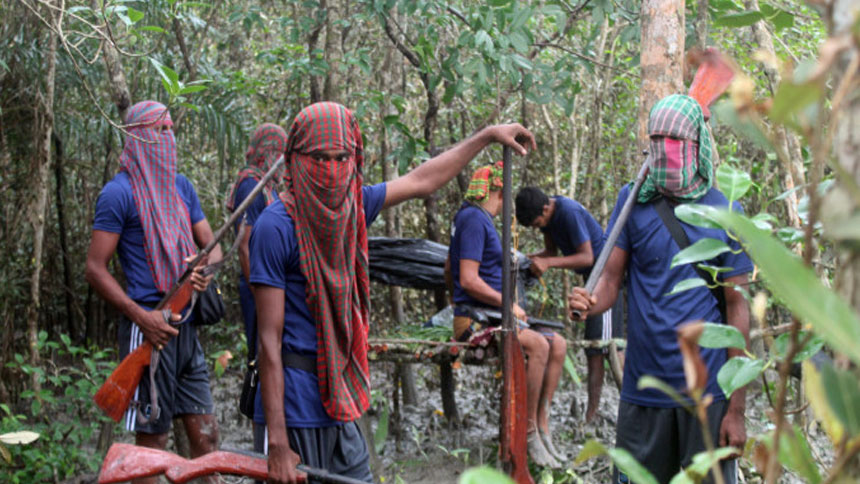
The Sundarbans remain not only physically isolated but also emotionally and administratively distant from the state. The people there carry voices shaped by hardship and the tidal environment they live in. The journey from Dhaka to Satkhira took around seven hours by highway, followed by a slow, almost three-hour trip on a damaged road to Shyamnagar, which was only 44 kilometers away on paper.

A motorcycle then took me 40 minutes to Munshiganj village, the last settlement before the Sundarbans, with mangroves visible on the horizon. Finally, an hour-long boat ride through narrow creeks led me to meet former pirates who had surrendered nearly a decade ago.
Between 2016 and 2018, a significant reconciliation effort was made where, through the mediation of journalist Mohsin Ul Hakim, 328 men from 32 pirate and dacoit groups surrendered their arms and returned to normal life in villages and river ports. Jahangir, a local intermediary, called it one of his greatest achievements. The state declared the Sundarbans “pirate-free” in 2018.
One example is Alam Sardar, former pirate gang commander, who now drives an auto-rickshaw. He surrendered in 2016 and, despite living modestly, feels content and determined not to return to his old life. Locals like Abdul Razzak, a grocer, have witnessed a remarkable change.
None of the surrendered pirates have harmed the community; instead, they have integrated by taking up jobs like rickshaw driving, fishing, farming, and guiding tourists. The community now trusts these former pirates more than the police, marking a successful reintegration and hope for lasting peace in the Sundarbans.