- More
Khaled Saifulla 22 Nov 2025 , 5:59 PM Print Edition

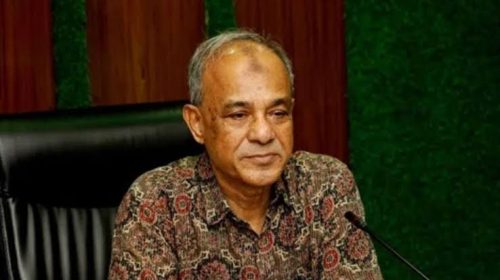
DHAKA, BANGLADESH — Daily Star Editor Mahfuz Anam warned that hatred, confusion, and falsehoods are being monetized on social media. He gave this warning during a session of the Bay of Bengal Conversation in the capital on Saturday.

He described this changing reality as a “danger of lies.” He called upon the country’s policymakers to act immediately to protect society. Referring to social media, Mr. Anam noted the direct link between revenue and toxicity. Specifically, he said, “The more hateful the comments, the more misinformation, the more lies, the more provocative writing against someone—the more the clicks, and the higher the revenue.”
The Centre for Governance Studies (CGS) organized the event. Mr. Anam delivered a solo speech on two key subjects: “War, Fragile States and the End of Global Stability” and “Artificial Intelligence and the Threat of Disinformation.”
Threat to Knowledge and Stability
Mr. Anam acknowledged that social media has democratized information flow. However, he warned that the negative side is that most content “are not information-based, not knowledge-driven, and not even rational.”
He also elaborated on global stability. He argued, “For small countries like ours, global stability is extremely important—particularly in the economic sphere.”
Mr. Anam defined knowledge, skills, and experience as Bangladesh’s most valuable assets. “We cannot compete with the world in terms of wealth or military strength,” he stated. Therefore, our only competitive advantage is knowledge. He warned that the current “era of populism” is rapidly leading the country toward a frightening reality.
Urgency of Investing in Research
The Daily Star editor addressed the national priority of education. He questioned why Bangladesh’s primary and secondary education standards never improve.
He asked pointedly, “Where do our graduates and postgraduates stand?”
He stressed that the country causes itself great harm by not investing sufficiently in research.
He cited China’s heavy investment in education as a crucial example.
Mr. Anam concluded that Bangladesh has not fully grasped the importance of knowledge in determining its future. He emphasized that the nation is “not investing in knowledge.” He warned that if the knowledge sector is not prioritized immediately, Bangladesh risks falling prey to “mental colonialism” in the future. He strongly asserted, “Bangladesh’s future will depend on a knowledge-based economy.”