- More
Khaled Saifulla 28 Dec 2025 , 6:10 PM Print Edition
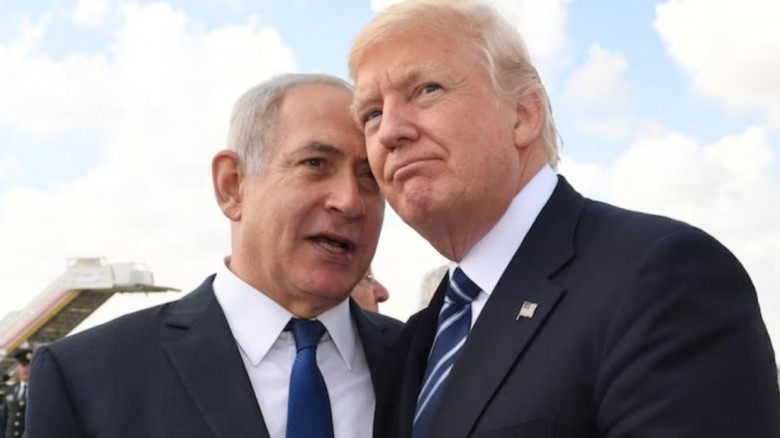
For over 30 years, Israeli Prime Minister Benjamin Netanyahu has portrayed Iran as a dire threat to Israel and the world. In June, U.S. President Donald Trump acted on these warnings by ordering airstrikes on Tehran’s nuclear facilities.

However, Netanyahu appears far from satisfied. On Monday (December 29), he is scheduled to meet Trump at the Mar-a-Lago resort in Florida, where he is expected to lobby for further military action against Iran. According to Al Jazeera, the focus of this discussion has shifted toward Iran’s ballistic missile program.
Israeli officials and their U.S.-based allies have renewed their calls for intervention, claiming that Tehran’s missile capabilities must be addressed urgently. Yet, analysts suggest that another conflict with Iran would directly clash with Trump’s stated foreign policy priorities.
Sina Toossi, a senior fellow at the Center for International Policy, noted that while Trump seeks to foster economic cooperation and diplomatic ties between Israel and Arab states, Netanyahu is pursuing a goal of regional military dominance. Toossi argues that the desire to permanently involve the U.S. in an endless war to dismantle the Iranian state reflects Israel’s objective of unquestioned expansionism and superiority—a goal that conflicts with Washington’s desire for stability without direct military involvement.
Trump, who has cast himself as a peacemaker after mediating a ceasefire in Gaza, claims to have brought peace to the Middle East for the first time in 3,000 years. His administration’s recently published National Security Strategy describes the Middle East as a region of partnership and investment, no longer a top priority for U.S. military resources.
While Washington promises to reduce its strategic military presence, Israel is lobbying for a war that could drag the U.S. back into conflict. Analysts suggest that since Trump declared Iran’s nuclear program “obliterated” after the June strikes, Israel has been forced to find a new “symbol of fear”—the missile program—to maintain pressure without publicly contradicting the U.S. President.
Trita Parsi of the Quincy Institute told Al Jazeera that Netanyahu is shifting focus to missiles because Trump is unwilling to revisit the nuclear issue. He warned that Israeli rhetoric might continuously shift targets to turn the confrontation with Iran into a permanent, “forever war.”