- More
Khaled Saifulla 6 Dec 2025 , 6:02 PM Print Edition

The agriculture ministry announced that onion imports will resume on December 7. The decision aims to stabilize the domestic market and curb recent sharp price increases.
A press release issued today confirmed the import details. The ministry will issue 50 import permits (IPs) daily. Each permit allows up to 30 tonnes of onions. This cautious, limited resumption signals a shift in government strategy, which had faced mounting public pressure from consumer rights groups.
Importers who applied for permits since August 1 are now eligible to reapply. Each importer may only submit one application. The ministry said the measure will continue until further notice to keep onion prices reasonable.
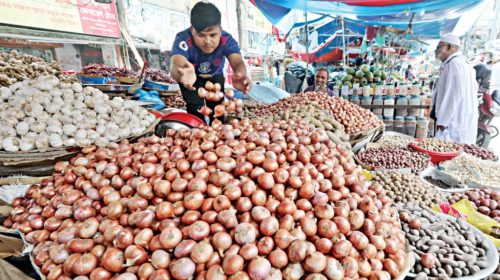
Today, onions cost Tk 150 per kg in Dhaka’s retail markets. This price is Tk 20–30 per kg higher than last week. The sudden surge has severely impacted household budgets, making the staple vegetable unaffordable for many low-income families.
The ministry had originally halted imports earlier this year to protect local farmers during the main harvest season.
“We must balance farmer interests with immediate consumer needs,” stated Dr. Kamrul Hasan, Spokesperson for the Agriculture Ministry. “This careful, limited approach ensures market stability without flooding the local supply and harming domestic growers.”
Traders say prices rose sharply for two reasons: Early-harvest onions have not yet arrived, and the ministry has issued no new import permits in recent weeks.
While the limited volume is welcomed, wholesalers remain cautious. “Fifty permits daily is a start, but it might not be enough to drop prices quickly,” said Aminul Islam, a wholesaler in the Karwan Bazar area. He hopes the government will ease restrictions if the local supply remains low in the coming weeks.
The Department of Agricultural Extension (DAE) estimates last season’s harvest was over 39 lakh tonnes, which was enough to meet domestic demand. However, the DAE projects a need for an additional 6–7 lakh tonnes of imports to offset post-harvest losses and ensure year-round availability.