- More
admin 6 Aug 2026 , 12:57 PM Print Edition
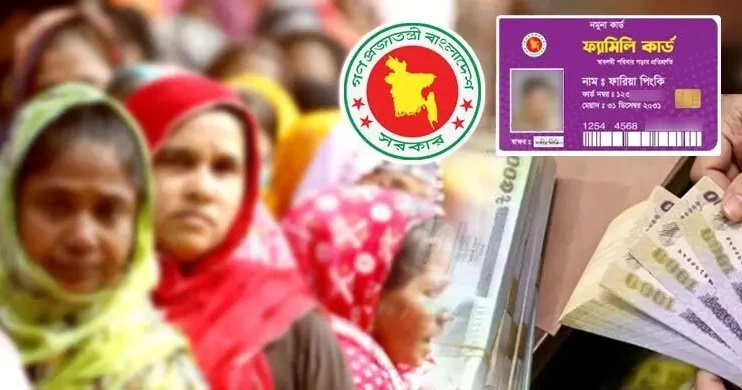
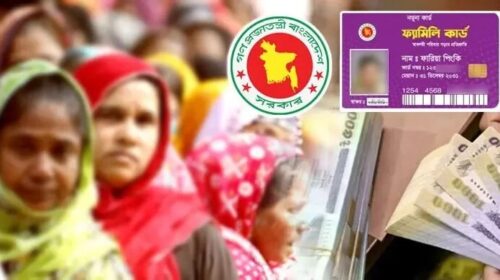
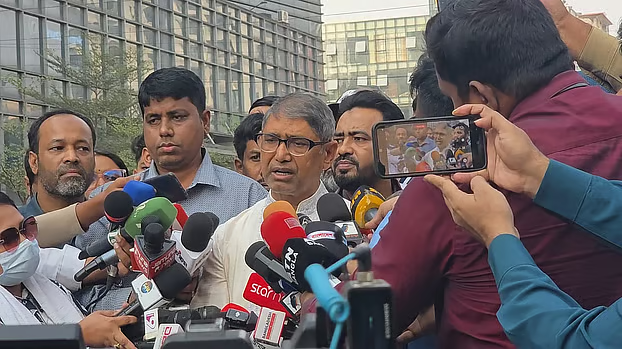
Online Desk : The government will officially launch the nationwide Family Card programme on August 16 following the successful completion of its pilot phase, with a target of bringing around 1.60 crore families under the scheme over the next four years, Social Welfare Minister AZM Zahid Hossain said on Thursday.

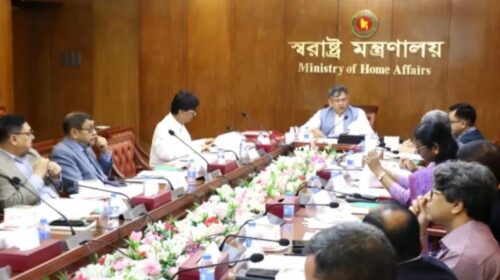
Prime Minister Tarique Rahman will inaugurate the programme in Latibabad Union of Kishoreganj Sadar upazila. The initiative will then be expanded in phases to all upazilas and unions across the country by the end of October, the minister told reporters after a meeting of the Cabinet Committee on the Family Card programme at the Ministry of Finance.
The meeting was chaired by Finance and Planning Minister Amir Khosru Mahmud Chowdhury.
Zahid said pilot projects had been carried out in 56 areas nationwide. Minor data collection issues were detected in Jashore and Kalmakanda of Netrokona, but those have since been resolved.
He said the remaining 54 pilot areas were implemented successfully, with the rate of fraudulent cases remaining below three percent.
Describing the initiative as a dynamic social registry-based programme, the minister said beneficiary information would be updated regularly to reflect changes in families’ socio-economic conditions.
“If a family moves out of poverty or falls back into financial hardship, the registry will be updated accordingly,” he said.
To ensure transparency and accurate beneficiary selection, public hearings will be held at the union level after data collection. The information will be reviewed and updated every month so that eligible families are included while ineligible beneficiaries are removed.
He said no discrimination would be made on the basis of religion, ethnicity or political affiliation, and beneficiaries would be selected solely on eligibility.
The minister said the programme aims not only to provide financial assistance but also to help low-income families become self-reliant.
Women in beneficiary households will be encouraged to use the support for children’s education, nutrition and healthcare, as well as income-generating activities such as poultry farming, tree plantation, tailoring, cottage industries and small businesses.
“This initiative will strengthen women’s economic empowerment while contributing to poverty reduction in rural areas,” he said.
Zahid said the programme’s impact would be monitored through regular independent evaluations involving the Finance Division, the Implementation Monitoring and Evaluation Division (IMED), and researchers from local and international universities.
He expressed hope that an initial impact assessment could be completed within six months of the programme’s launch.
The minister also said a three-tier monitoring mechanism had been established to oversee data collection, verification and approval.
Separate committees will operate at the union, upazila, district, divisional and national levels, with Upazila Nirbahi Officers (UNOs), Deputy Commissioners (DCs) and the Cabinet Committee supervising implementation.
He added that beneficiary data would be cross-checked with the Ministry of Finance and other relevant agencies to prevent duplication of social benefits and ensure transparency, accountability and technology-based management throughout the programme.