- More
admin 8 Aug 2026 , 9:54 AM Print Edition
By Anok Ali Hossain Shahidi

Acting Editor, Daily Morning Times
In a significant effort to strengthen Bangladesh’s food, agriculture and nutrition security, the Bangladesh Agricultural Development Corporation (BADC), under the Ministry of Agriculture, has been implementing various programmes for the production, processing and distribution of quality pulse and oilseed seeds since 1980. The activities of the Pulse and Oilseed Division have continued under different development projects over the years. The latest initiative, titled “Strengthening Sustainable Nutrition Security through Pulse and Oilseed Production Project (Phase-II),” was approved by the Executive Committee of the National Economic Council (ECNEC) for implementation from January 2025 to June 2029 and is currently under execution. The project aims to produce 18,000 metric tonnes of high-quality pulse and oilseed seeds. It is a comprehensive programme encompassing seed production, procurement, processing, preservation and distribution. Through systematic planning, efficient management and effective implementation, the project is expected to make a significant contribution to the national economy while enhancing the country’s nutrition and food security.
At present, the project is being implemented through three Pulse and Oilseed Farms, three Seed Processing Centres and twelve Contract Grower Centres. These facilities are carrying out seed production, collection, processing, storage and distribution activities across 42 districts, two city corporations and 200 upazilas covering all eight administrative divisions of Bangladesh. The total estimated cost of the project stands at Tk 265.7846 crore. Of this amount, Tk 239.0867 crore has been allocated for administrative and revenue expenditures, while Tk 23.9862 crore has been earmarked for development activities. Despite comparatively limited development expenditure, the project has been designed with a realistic and result-oriented implementation strategy, reflecting sound planning and efficient resource management. During the 2025-2026 fiscal year, contract growers under the project produced 3,723.112 metric tonnes of quality pulse and oilseed seeds. Of the total production, 1,915.931 metric tonnes comprised pulse seeds, while 1,809.181 metric tonnes were oilseed seeds.
These quality seeds will be distributed among farmers across the country during the 2026-2027 fiscal year. Their utilization is expected to facilitate cultivation on more than 600,000 acres of agricultural land, resulting in an estimated production of approximately 257,275 metric tonnes of crops with an estimated market value of around Tk 2,987.87 crore. Furthermore, the use of improved quality seeds produced under the project is expected to increase crop yields by an average of 15-20 percent, generating an additional 51,455.006 metric tonnes of agricultural produce valued at nearly Tk 597.57 crore. During the 2025-2026 fiscal year, the project incurred an expenditure of approximately Tk 68.94 crore. Once fully implemented, the project is expected to contribute an additional Tk 600 crore directly to the national economy, generating an estimated eight-fold economic turnover during the corresponding fiscal year.
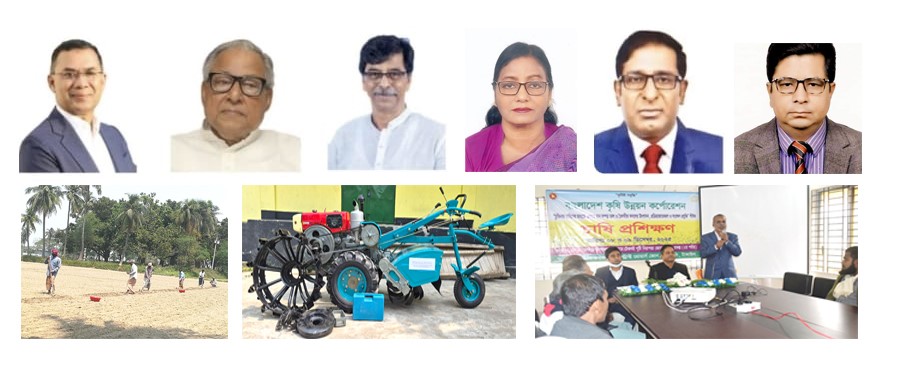
The project is being implemented under the leadership of Project Director Dr. Md. Shafiqul Islam, who joined BADC’s Pulse and Oilseed Division on 13 August 2024. Immediately after assuming office, he initiated the preparation of the Development Project Proposal (DPP), successfully secured its approval at the Project Evaluation Committee (PEC), and subsequently facilitated its approval by ECNEC. Since taking charge, Dr. Islam has reorganised the project’s implementation framework and strengthened field-level coordination to ensure timely execution of all activities. His professional expertise, transparent management, integrity and regular field supervision have significantly accelerated project implementation. Officials associated with the programme believe.
Policy Support, Official Perspectives and the Way Forward:
Speaking about the ongoing activities of the project, BADC Chairman Md. Azizul Islam said the Bangladesh Agricultural Development Corporation has been playing a pioneering role in strengthening the country’s agricultural sector since its establishment in 1961 through the development of fertilizer, irrigation and quality seed management systems.
“For more than six decades, BADC has been working relentlessly to ensure Bangladesh’s food security. The ‘Strengthening Sustainable Nutrition Security through Pulse and Oilseed Production Project (Phase-II)’ has been formulated with the objective of enhancing the country’s nutrition security through increased production and distribution of quality pulse and oilseed seeds. Our officers and field-level personnel are implementing the project with dedication and professionalism to achieve its desired goals,” he said.
After being briefed on the project’s progress, Acting Secretary to the Ministry of Agriculture Dr. Rashida Ferdous described nutrition security as one of the country’s foremost development priorities.
“Ensuring balanced nutrition is an essential component of national food security. The Ministry of Agriculture is committed to expanding sustainable agricultural development, and BADC continues to play a leading role in this regard. Through the implementation of this project, Bangladesh will strengthen its capacity to produce quality pulse and oilseed seeds, thereby supporting long-term food and nutrition security. The Ministry will continue extending all necessary policy and institutional support for the successful implementation of the project,” she said.
Minister for Agriculture Md. Aminur Rashid said Bangladesh’s agricultural advancement has been built upon a long tradition of policy support for farmers and the seed sector.
He recalled that Shaheed President Ziaur Rahman introduced landmark agricultural reforms, including the National Seed Ordinance of 1977, to strengthen quality seed production and distribution while expanding farmers’ access to fertilizer, power tillers and deep tube wells. He further noted that former Prime Minister Begum Khaleda Zia, during her administrations between 1991-1996 and 2001-2006, adopted a series of policies aimed at modernizing agriculture through easier agricultural credit, wider distribution of improved seeds and fertilizers, enhanced subsidies, technology-based farming and expanded rural infrastructure.
“Following that development philosophy, Prime Minister Tarique Rahman is now working to implement his ‘Bangladesh First’ vision and the 31-point reform agenda with special emphasis on ensuring the supply of improved and climate-resilient seeds. The Ministry of Agriculture remains fully committed to supporting BADC’s Pulse and Oilseed Production Project so that the country can achieve greater food and nutrition security while reducing dependence on imported agricultural commodities,” the minister said.
The project was also presented to Nazrul Islam Khan, Adviser to the Prime Minister on Agriculture and Political Affairs, who expressed optimism regarding its long-term national impact.
“I firmly believe that Prime Minister Tarique Rahman will continue working for the country’s development, following the vision of Shaheed President Ziaur Rahman and former Prime Minister Begum Khaleda Zia. The Ministry of Agriculture has undertaken a number of initiatives to strengthen food security, while BADC has been making remarkable contributions since 1961. I am confident that this Pulse and Oilseed Production Project will play a vital role in ensuring sustainable nutrition security, increasing domestic production and improving the livelihoods of our farmers,” he said.
Agricultural economists and sector experts believe that expanding the production and supply of quality pulse and oilseed seeds is essential for ensuring Bangladesh’s long-term food and nutrition security. Successful implementation of the project is expected to reduce the country’s dependence on imported pulses and edible oil, save a substantial amount of foreign exchange, generate higher farm incomes, create rural employment opportunities and strengthen the national economy.
Backed by sound planning, efficient management and strong institutional support, the “Strengthening Sustainable Nutrition Security through Pulse and Oilseed Production Project (Phase-II)” is emerging as one of BADC’s flagship agricultural initiatives. Beyond increasing seed production, the project is expected to play a transformative role in building a resilient agricultural system, promoting sustainable rural development and moving Bangladesh closer to self-reliance in pulse and oilseed production.